
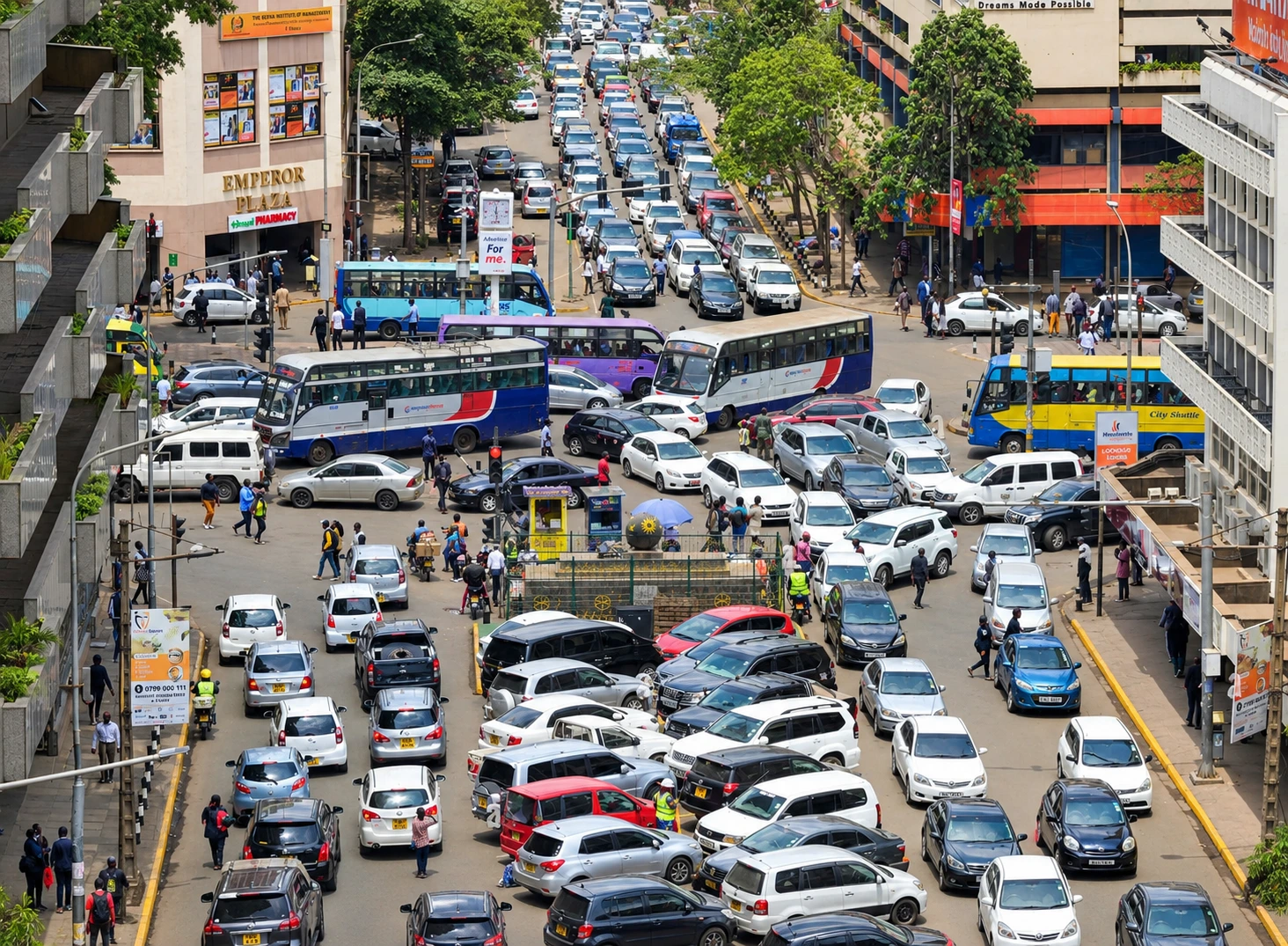
Matatus Don't Always Signal
The Highway Code assumes all drivers will indicate before turning or stopping. Nairobi matatus frequently stop without warning to pick up or drop off passengers. Keep a 3–4 second following distance behind any matatu or bus on a busy route, and never overtake one near a bus stop or stage.
The Merge Isn't Always Polite
At lane merges and roundabouts, waiting for someone to wave you in is often a long wait. Confident, decisive merging — making your intentions clear with your position and speed — keeps traffic flowing and reduces confrontation. Hesitation is more dangerous than assertive, safe merging.
Rain Changes Everything
Nairobi roads flood quickly and become extremely slippery in the first 10–15 minutes of rain. Reduce speed significantly, increase following distance, and watch for potholes hidden under standing water. Don't assume drainage is working — some of Nairobi's busiest roads flood at the first heavy shower.
Boda Bodas Come From Every Direction
Motorcycles in Nairobi filter between lanes, appear from footpaths, and move against traffic on one-way roads. Always check your mirrors before opening a door, before turning, and before any lateral movement. A boda boda can appear in a mirror blind spot within seconds.
Night Driving Has Its Own Risks
Poorly lit roads, pedestrians in dark clothing, and vehicles without functioning lights make Nairobi night driving genuinely challenging for new drivers. Use full headlights, reduce speed on unlit roads, and stay on well-lit main roads until you've built experience. The Highway Code teaches lights — Nairobi teaches you when to actually use them.